
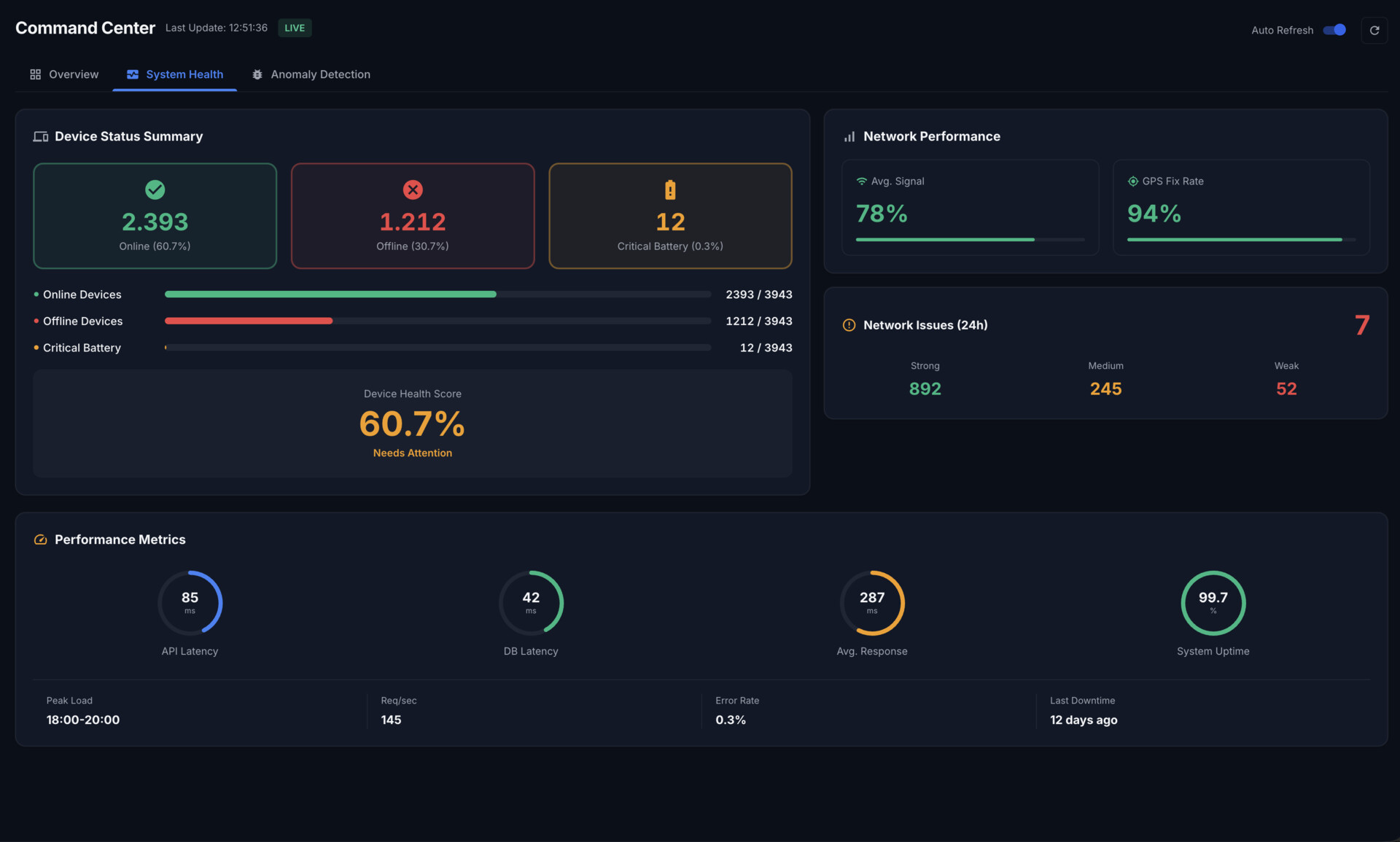
The Monitoring Center Nobody Talks About
Every electronic monitoring vendor shows polished screenshots of their dashboard. Few discuss what happens at 3 AM on a Tuesday when a single operator is managing 800 active subjects, 47 unresolved alerts are queued, and a priority geofence breach just triggered for a domestic violence case. The monitoring center is where technology meets operational reality. Its effectiveness depends not on the software's feature list but on how well the platform supports human decision-making under pressure and fatigue.
Alert Triage: The Most Critical Workflow
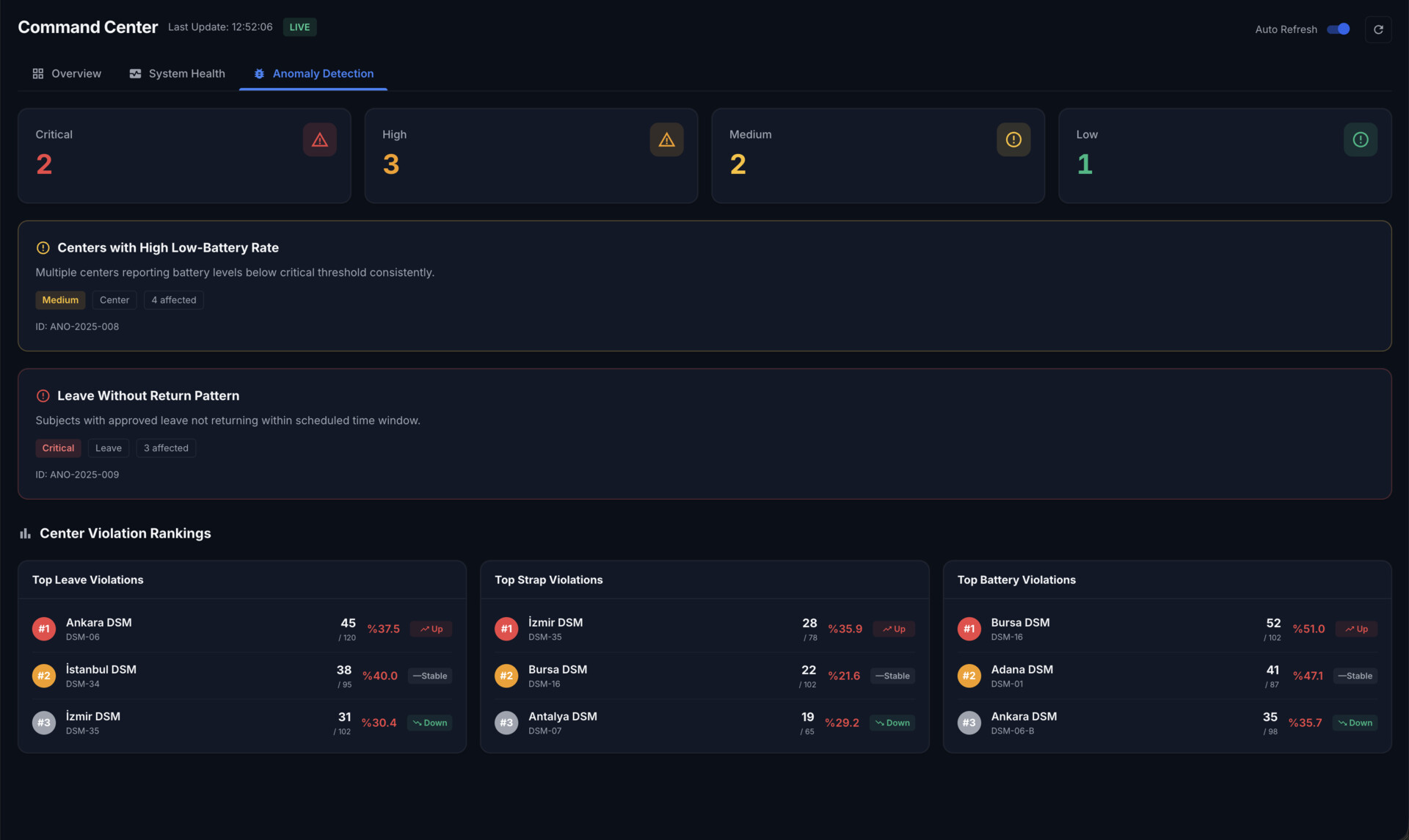
Raw alert volume is the number one operational challenge in monitoring centers. A poorly tuned system generates 3-5 alerts per subject per day. For a 5,000-subject program, that is 15,000-25,000 daily alerts — an impossible workload for any human team. Effective alert management requires multiple layers: automatic suppression of known false positives (GPS drift near building edges, brief signal loss during subway transit), severity classification based on subject risk level and violation type, and intelligent grouping of related alerts (a subject who triggers three zone violations in sequence is one event, not three). The platform must reduce raw alerts to actionable incidents. A well-configured system achieves a 90-95% reduction — turning 20,000 raw alerts into 1,000-2,000 incidents that actually require human attention.
Shift Management and Operator Fatigue
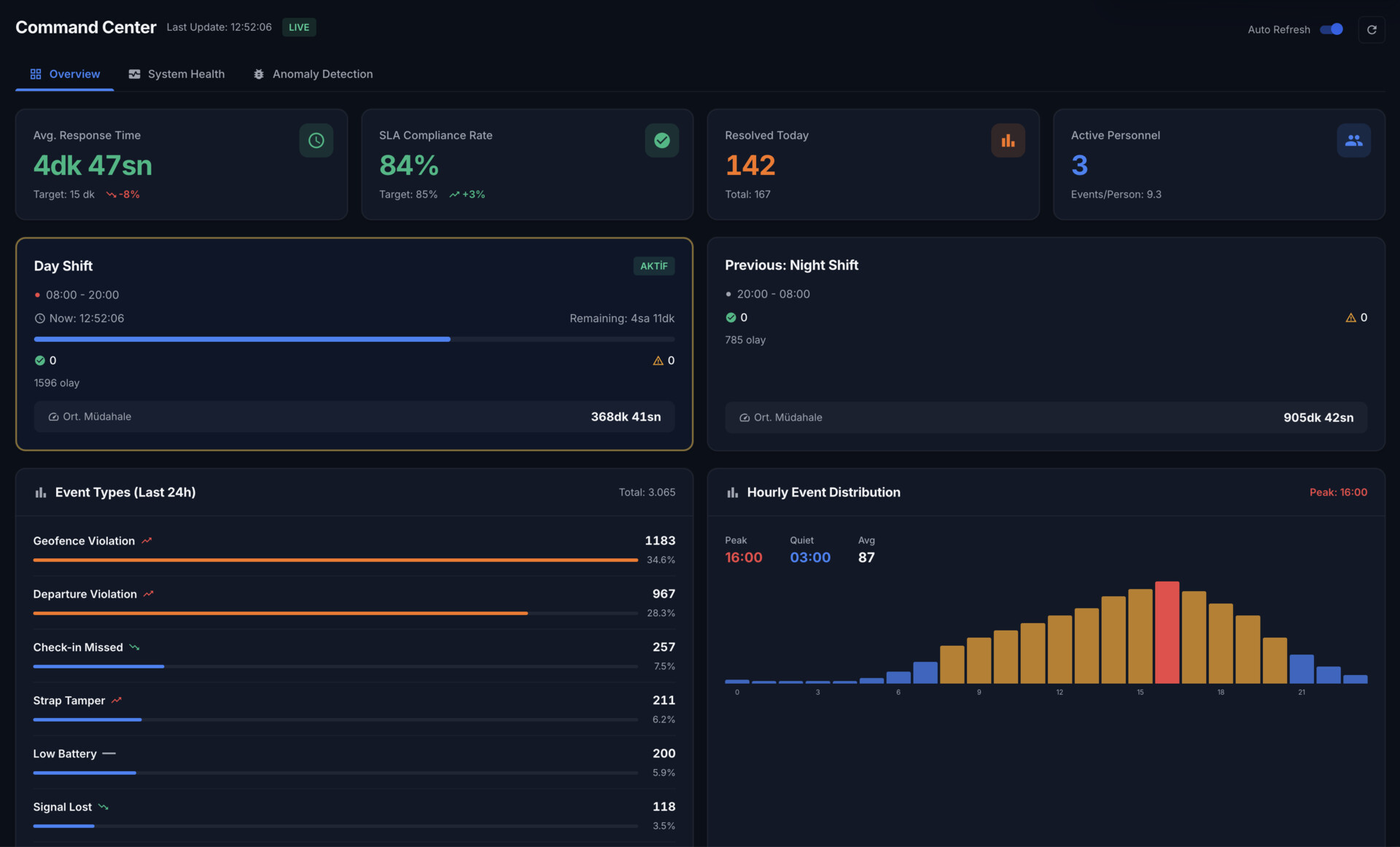
Monitoring centers operate on rotating shifts — typically three 8-hour shifts or two 12-hour shifts. Shift handover is the highest-risk moment in daily operations. Incomplete handover means incoming operators lack context on developing situations. The platform should enforce structured handover: pending items that cannot be deferred, active priority cases, subjects with escalating patterns. Some institutions use a mandatory 15-minute overlap between shifts. Others rely on the platform's shift summary report. Both approaches work, but neither works without the system explicitly supporting the handover process.
Violation Resolution: From Alert to Documentation
A violation is not resolved when the alert is acknowledged — it is resolved when the response is documented, the subject's status is updated, and the judicial record reflects the event. This full lifecycle typically takes 4-12 minutes for routine violations and 30-60 minutes for complex cases requiring field coordination. Platforms that treat alert acknowledgment as resolution create a dangerous gap between what the system reports and what actually happened. Every violation should have a documented resolution with operator ID, timestamp, action taken, and outcome — because that record will eventually be presented in court.
Performance Metrics That Actually Matter
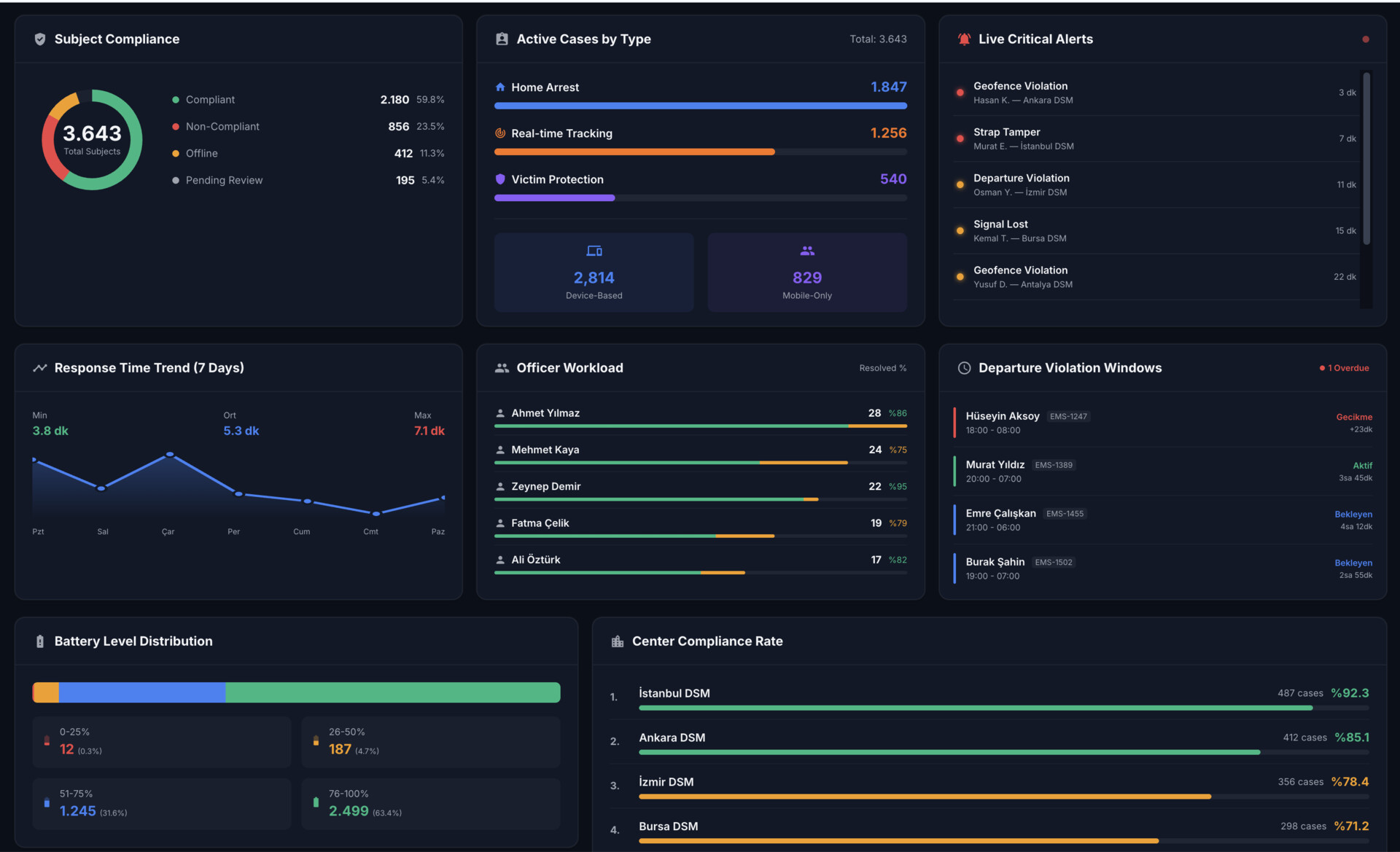
Monitoring centers should track five key performance indicators: mean time to first response (target: under 120 seconds for priority alerts), resolution rate per shift, false positive ratio, escalation frequency, and operator utilization. These metrics expose operational bottlenecks that are invisible without measurement. A center that consistently exceeds 180-second response times during night shifts has a staffing problem. A center with rising false positive ratios has a configuration problem. A center where escalation frequency is increasing has a training problem. The platform must surface these metrics automatically — expecting supervisors to compile them manually guarantees they will not be tracked.
Communication Integration: Voice Calls as Operational Data
Direct voice communication between the monitoring center and subjects is not optional — it is a core operational capability. When a geofence alert triggers, the first response is often a phone call to the subject to assess the situation before escalating. These calls must be logged as part of the operational record, with timestamps, duration, and outcome notes. Platforms that treat communication as a separate tool — switching between a monitoring dashboard and a phone system — add friction to time-critical workflows. Integrated voice capability, with calls initiated from the subject record and automatically logged, reduces response time and creates a complete operational audit trail.