
 Observer Fire · National Fire Monitoring Platform
Central Monitoring of Fire Alarm Systems in Critical Facilities
A national early-warning infrastructure that monitors the fire alarm panels of hospitals, hotels, organized industrial zones, public buildings and high-rises at province, region and country scale, and detects faulty panels and detectors before a fire breaks out.
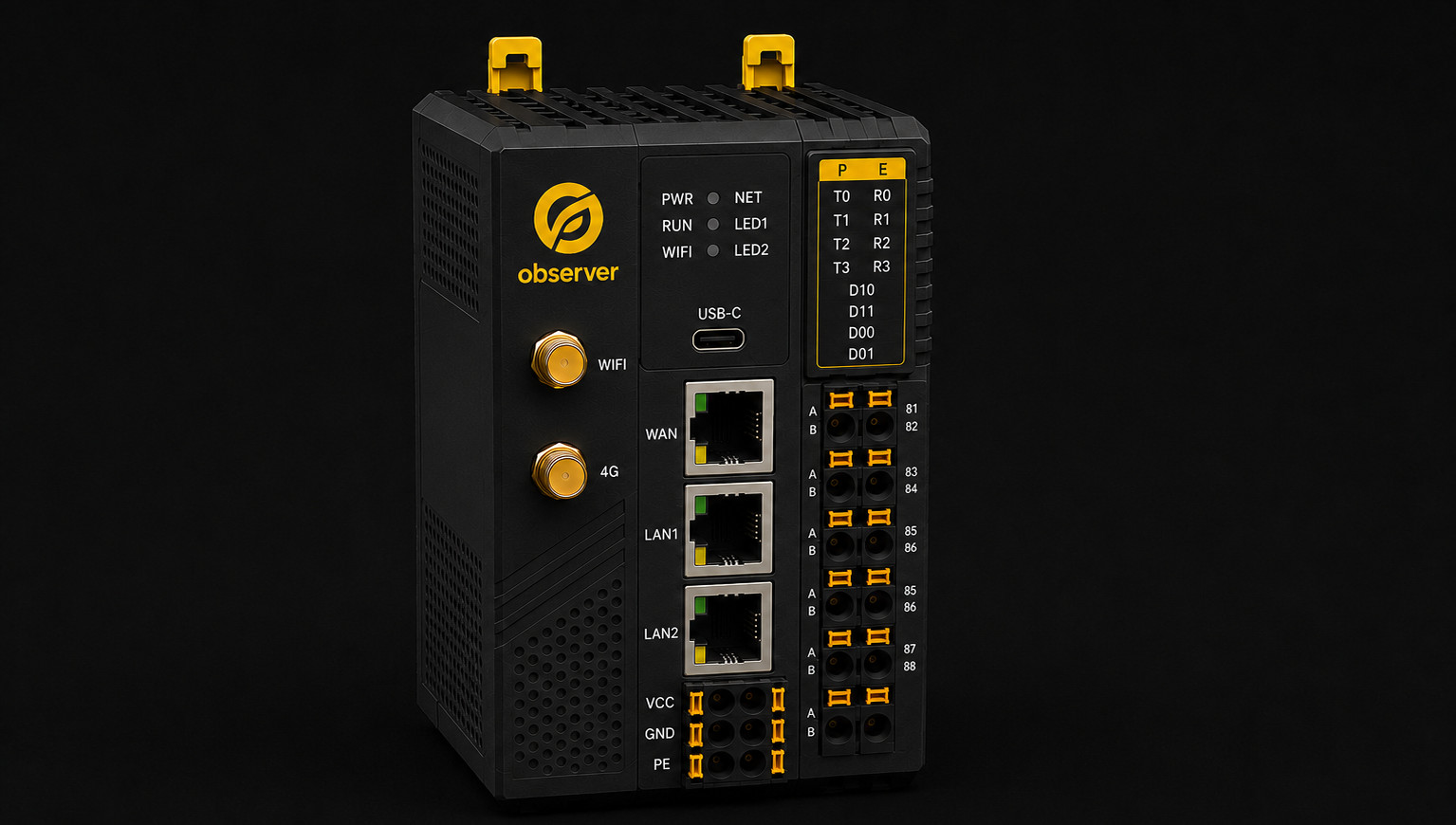
Current situation: fire alarm systems are not monitored centrally
Thousands of building fires occur every year. A significant share of the losses are not caused by failing to detect the fire, but by detectors that do not work, faulty panels and response that starts too late.
No central visibility
No authority can see which panel is faulty in which institution at province or national scale. The information is trapped building by building.
Inspection is on-site and late
Compliance is only known at the moment of a physical inspection. A detector that goes out of service after the inspection can go unnoticed for months.
Records on paper
Maintenance and fault records are kept in logbooks or separate spreadsheets. They cannot be verified or compared.
Risk cannot be prioritized
Limited inspection capacity is sent to the next address on the list, not to the buildings where the risk is highest. There is no data-driven priority.
The aim is not to watch the fire but to verify, before a fire starts, that the system is working. A faulty detector that is not tracked causes the system to react late or not at all. Inspection therefore needs to be recorded and verifiable.
A national fire safety network monitored from one center
Connects the fire panels of critical facilities across the country to a single platform, providing live status, early fault warning and risk priority at province, region and national scale.
Continuous monitoring
Panel and detector status is transmitted to the center 24/7; compliance is monitored continuously.
Warning before the fire
Offline panels, low batteries, disabled or contaminated detectors: the fault is detected and reported before it turns into a fire.
Central decision
Limited inspection and response resources are directed, based on data, to the buildings where the risk is highest.
Early detection of faulty panels and detectors
The biggest risk in a fire is a protection system that has gone out of service unnoticed. The platform detects such faults and notifies the responsible unit.
Silent faults detected
- ×Offline panel: Power or connection lost, no protection.
- ×Disabled detector: Switched off under the pretext of false alarms.
- !Contaminated detector: Detects smoke late.
- !Low battery / power supply fault: Protection collapses during a power outage.
- ◷Overdue maintenance: The mandatory periodic test interval has been exceeded.
Fault, alert and resolution cycle
A faulty detector that is not tracked causes the system to fail or react late during a fire. Fixing the fault beforehand ensures the system does its job when needed.
Compatible with different panel brands and facility sizes
The Observer gateway connects to different panel brands and models without modifying the existing fire panels. With expansion modules it can be used from a small building up to hospitals or industrial facilities with hundreds of connection points.
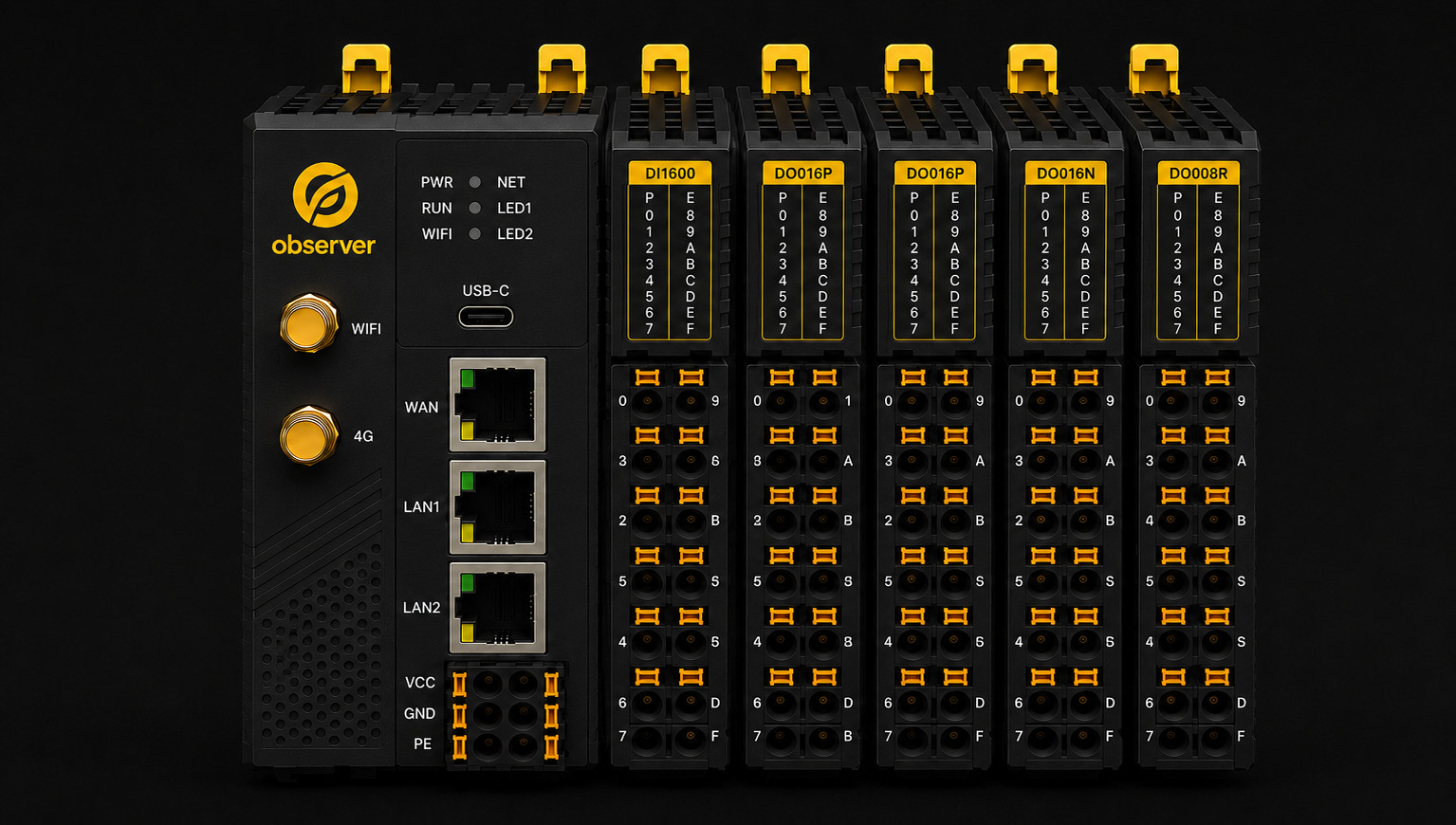
What it provides
- Compatible with dozens of fire panel brands and models
- Grows with modules: one system from a small building to a huge facility
- Collects hundreds of panels, detectors and zones from a single point
- Your existing panels stay in place; nothing is replaced
- Relays alarm and fault information to the center instantly
Modules are added as the need grows. The same system works the same way in a small building and in a large facility.
A central dashboard for public authorities
Lets you monitor the whole country from a single screen and give data-driven priority to the highest-risk buildings.
Region-based view
All facilities at province, district and neighborhood scale; risky areas on the map.
Compliance rates
Maintenance compliance percentage for every province and institution; overdue facilities listed instantly.
Critical alert aggregation
Critical alarms across the country on one panel; response priority is determined by data.
Inspection reports
Compliance, incident and risk reports ready with one click; archivable and verifiable.
- Neutral comparison between institutions
- Early detection of regions where risk concentrates
- An evidence base for policy decisions
Every facility receives an objective 0–100 score based on faults, overdue maintenance and facility type; resources are directed to the riskiest.
Digital, verifiable inspection records
The periodic test and maintenance obligations of fire protection regulations are met with digital, verifiable records instead of paper.
Periodic maintenance calendar
- WeeklyVisual check, indicator lights
- MonthlyPanel test, detector sampling
- QuarterlySystem-wide functional test
- Semi-annualIn-depth inspection and calibration
- AnnualFull certification audit
Audit-ready records
- Time-stamped records: Every maintenance and test is stored with who and when.
- Automatic reminders: Warning before the deadline; red flag once it passes.
- Immutable history: Records cannot be altered retroactively.
- Proof of responsibility: The compliance record is evidence in insurance and legal proceedings.
Compliance is recorded every day of the year, not only on inspection day. Overdue maintenance or a fault becomes visible without waiting for an inspection.
Expected impact and phased rollout
Rather than covering the whole country at once, the system is first piloted in one province; after the results are verified it is extended to regional and national scale.
Pilot
Implementation in selected critical facilities in one province; validation of metrics and benefits.
Province-wide
All critical facilities in the pilot province; provincial directorate dashboard goes live.
Regional
Expansion to priority regions; comparison between provinces.
National
Nationwide coverage; national dashboard and policy integration.
The stated rates represent the expected improvement range of continuous monitoring compared with paper-based periodic inspection; they will be validated with pilot data.
Learn more about the National Fire Monitoring Platform
The platform provides central monitoring of fire alarm systems in critical facilities and early detection of faults. The pilot installation is complete and testing is ongoing. Contact us for details and a presentation.